foodscout blog

Mini Greenhouse Tent Saves Greens From Snow Storm

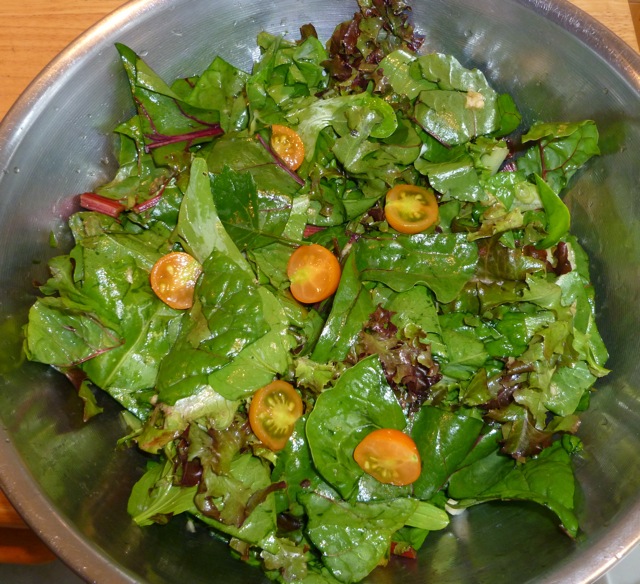
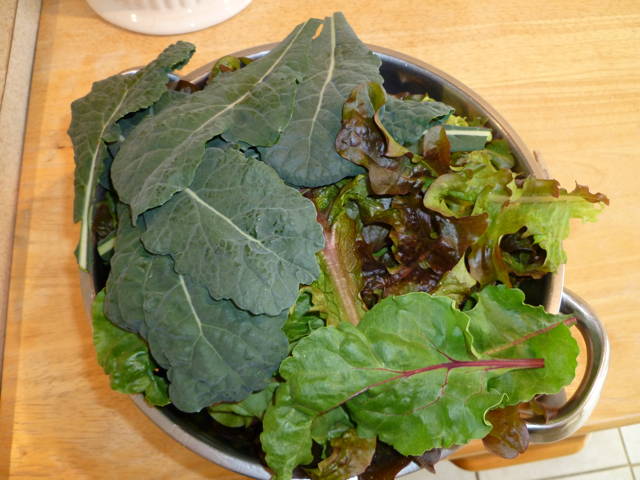
garden tentAbout a foot of snow fell this weekend in Asheville. Power was out for 15 hours, stores and restaurants were closed, and cars were snowed in for days. But we had fresh garden greens this weekend from our garden.

Our StarterHouse portable greenhouse by FlowerHouse arrived just in time. We’ve had it up for over a week, trying to decide if we ought to get more for the other beds. There are various brands as well as do-it-yourself plans available, but this one was cost-effective at $80, and it just happened to fit our 4′X8′ garden perfectly.

It does have some drawbacks. The most notable is that it collapsed  under the weight of a foot of snow. Had we not caught it right away, it could have done major damage to our plants. On the bright side, after clearing the snow off of it, it easily popped right back up again quite easily. So in the future, we’ll make sure to clear off accumulating snow after a few inches fall.

greens from our gardenAnother minor hassle is that the zippers can be hard to open and close when it is below freezing because ice can form. This is a pain, but worth the trouble considering the benefits.

In colder climates, it’s possible that this tent would not protect plants adequately from the cold. It’s perfect for our area in the North Carolina mountains.

After this weekend, we are very pleased with this product and will order a second one so that we can keep more greens growing during the winter.

We make absolutely no money from FlowerHouse. We just really like this product.

Article: That Tap Water Is Legal but May Be Unhealthy

unsafe waterWe’ve been filtering our water for years, but after doing more research on water, decided to switch to bottled distilled water. Tap water is so bad these days that filtering it doesn’t get all the chemicals out. Flouride, in particular, was the main impetus for the switch. That’s not to say that filtering your tap water is not worthwhile, because it is. We chose to take the extra step.

Even during times when money has been scarce, we kept room in our budget for bottled water. Nothing is more important to long-term and short-term health than clean water.

So this recent article in the New York Times was a welcome surprise. It is painful to hear that so many people are consuming unsafe water in the United States. But an honest look at the problem allows us to make changes for the better.

The 35-year-old federal law regulating tap water is so out of date that the water Americans drink can pose what scientists say are serious health risks — and still be legal.

Only 91 contaminants are regulated by the Safe Drinking Water Act, yet more than 60,000 chemicals are used within the United States, according to Environmental Protection Agency estimates. Government and independent scientists have scrutinized thousands of those chemicals in recent decades, and identified hundreds associated with a risk of cancer and other diseases at small concentrations in drinking water, according to an analysis of government records by The New York Times.

Read the full article in the NY Times here

Article: Exploring a Low-Acid Diet for Bone Health

This isn’t news in some health-conscious circles, but it’s wonderful to see it addressed so prominently in the New York Times. This article challenges the idea, long touted by the dairy industry, that milk is beneficial in combating osteoporosis. It goes even further and suggests that maybe it is part of the problem.

The science of osteoporosis and its resultant fractures has long been plagued by some vexing observations. Why, for example, are osteoporotic fractures relatively rare in Asian countries like Japan, where people live as long or longer than Americans and consume almost no calcium-rich dairy products? Why, in Western countries that consume the most dairy foods, are rates of osteoporotic fractures among the highest in the world? And why has no consistent link been found between the amount of calcium people consume and protection against osteoporosis?

An alternative theory of bone health may — or may not — explain these apparent contradictions. It is the theory of low-acid eating, a diet laden with fruits and vegetables but relatively low in acid-producing protein and moderate in cereal grains. Its proponents suggest that this menu plan could lead to stronger bones than the typical American diet rich in dairy products and animal protein, often enhanced by calcium supplements.

Read the full article here

Harvesting Unripe Peppers

unripe sweet peppersWe planted our red sweet peppers quite a bit late in the season. My plants produced a lot of peppers but did not have a chance to fully ripen before the first frost came and withered all the leaves.

My gardening advisor suggested we go ahead and harvest the peppers, since they were already pretty large.

Definitely, they are not as tasty as they should be.  They are slightly bitter and not as crispy as they should be. But they are still pretty good and definitely have that same refreshing taste that all home grown food seems to have.

Now that the peppers and other summer vegetables are gone, there’s space to plant some more winter greens. I’ve just added winter lettuce and arugula to my garden beds.

Tiny Urban Gardens Wherever They Will Fit

sidewalk garden bedI spend a lot of time walking around my neighborhood. I used to enjoy the pretty landscaping, but over the past year or so, a significant change has happened. More and more neighbors are turning their yards into vegetable gardens; finding any patch of earth that gets sunlight and planting food.

This is an older neighborhood so there are many wonderful huge trees, which means a lot of yards are too shady to grow food. That hasn’t deterred some from planting their gardens in less conventional places. Back yards, hidden behind fences, are no longer the only place you can put a garden.

Entire front yards are now replaced with rows of leafy greens.  Steep hillsides are turned into terraced gardens. And my personal favorite: 4 neighbors got together and built raised garden beds in the “right of way” area between the sidewalk and the road.

You could take this explosion of urban vegetable gardening as a negative sign; highlighting our lack of faith in the future of our food supply. You could also take it as a positive sign; that a rapidly growing number of people are taking control of their health and reconnecting with real wholesome food.

If you want to grow your own food, you can find a way.

Gardening and Farming on Rooftops in the big cities

rooftop farmEven in the Big Apple, residents are finding ways to garden. One resident has even created a 6,000 square foot commercial organic farm, on a rooftop in Brooklyn.

Check out the video here.

Learn more about Rooftop Farms, in Brooklyn NY.

Cabbage Worms – Importance of Daily Garden Checks

dino kale - cabbage wormsI was told when I put in my garden to check it every single day for damaging insects and slugs. I enjoy my morning (and afternoon) visits to my garden so much that it was never a problem to follow through on that. But with these crazy rain storms we’ve been having here in Western North Carolina, I went more than 2 days without checking in on it.

What I found was my young dinosaur kale ravaged by cabbage worms. Cabbage worms are a moth larvae that love kale, which is a member of the same family as cabbage. They are almost the same exact color as young leafy greens so you have to really look to see them. I found more than a dozen happily eating away all of the new leaves, leaving only green stalks sticking up.

But all is not lost. I removed them. The next day I went back out and removed a dozen more. The third day there were only a couple, which is pretty normal.

New leaves are growing in and I will have beautiful kale soon enough. I will not neglect my garden again; come rain, hail, sleet, or snow.

My chard was also attacked, but by slugs. The chard is so large and strong already that the slugs didn’t do much damage. I removed them to what I call “slughaven”. I can’t help it – I’m sentimental about slugs for some reason. I can’t bear to cause them harm.

Tomato Blight in the Southeast Mountains

Late Blight - TomatoesThere’s been a lot of news lately about late blight hitting tomato crops in the north east. Sadly, the same has happened here in the mountains of Western North Carolina, where temperatures are a little cooler than most of the Southeast.

We planted our tomatoes late so we never managed to get a single edible fruit before late blight hit our tomato plants. Several beautiful large green tomatoes were forming and we were so looking forward to watching them to turn red.

At first, I noticed the leaves on certain branches were wilting and turning brown. I diligently cut them off and assumed the rest of the plant was fine. But then a new group of leaves did the same, and it continued that way just about every day. When the tomatoes started forming brown rotten-looking spots on them and literally molded while still on the vine, I figured something was seriously wrong.

It didn’t take much research to discover that my tomatoes fell prey to late blight. I tried to save the plants but I had to finally pull them out this morning. So few branches were even left and there was no way they were going to recover. I’ll try again for fresh tomatoes next year.

Local food shopping – trade produce with your neighbors

A new website called Veggie Trader is now available for any zipcode in the U.S., provided all you gardeners sign up and participate. Veggie Trader allows you to barter your back yard garden produce with your neighbors. Wondering what to do with all those tomatoes? Maybe your neighbor wants some. Make a few bucks on the side or trade for some peppers or squash or whatever you are lacking.

Our foodscout garden has provided us with some tasty veggies, but not yet enough to have excess. We’ve signed up our foodscout garden anyway though.

Veggie Trader is just getting started. Help get it going and thousands of others will be sure to join in.

So Long, Summer Squash – Pickleworms Attack

We got our garden started pretty late in the season, but we figured we would try for some summer squash anyway. And we got a good dozen or so fruits off of it which were all delicious.

Suddenly, the squashes started rotting on the plant and then I noticed little holes had been bored into each one. My squash plants were all infested with pickleworms, which are the larvae of a type of moth that is common in the southeast.

From the North Carolina State University website: The pickleworm is the most destructive insect pest of cucumbers, summer squash and cantaloupes in North Carolina. For many years, it was unprofitable to grow cucumbers in mid or late season because of this pest.

Aside from the recommendation for pesticide use, their page is full of great information for a new gardener. After learning more, I realize I should have kept the squash plants in the garden to protect the cucumbers that are starting to produce fruit. From the NCSU webpage: Although cucumbers are severly damaged some years, squash appears to be the preferred and favorite host. Squash flowers, furit and small plants become heavily infested while adjacent cucumber flowers and fruit may remain clean.

Next »